
Dating News
Top Long Distance Relationship Tips for 2025
Discover essential long distance relationship tips to stay connected and strengthen your bond. Read these expert strategies today!


Staying Connected Across the Miles
Long-distance relationships present unique challenges, but they can absolutely thrive with the right approach. This listicle provides eight essential long-distance relationship tips to help you stay connected and build a stronger bond with your partner. Learn how to establish healthy communication routines, plan visits, use technology creatively, maintain individual independence, build trust, and eventually close the distance. Following these long-distance relationship tips will provide a roadmap for navigating the complexities of love and distance in 2025 and beyond.
1. Establish Clear Communication Routines
One of the most crucial long distance relationship tips is establishing clear communication routines. Distance can create a sense of disconnect and uncertainty, but implementing consistent communication patterns helps bridge the gap and strengthens the bond between partners. This involves more than just sporadic texts or calls; it requires a conscious effort to create a structured communication plan that works for both of you. This plan should incorporate regular times for calls, texts, and video chats, tailored to accommodate both partners' schedules and time zones, forming a predictable rhythm in the relationship. This predictability offers a sense of stability and reassurance, making the distance feel less daunting.

Think of it like this: in a geographically close relationship, you have regular shared experiences, like dinner together or weekend outings. In a long-distance relationship, scheduled communication acts as a substitute, offering those vital moments of connection. These routines not only help maintain a sense of normalcy but also provide a platform for sharing daily experiences, discussing concerns, and simply enjoying each other’s company, even from miles apart. It deserves a top spot on any list of long distance relationship tips because it addresses the core challenge of maintaining connection despite physical separation.
Successful implementation of communication routines can take many forms. Consider these examples: a daily good morning and goodnight text can be a simple yet powerful way to start and end the day together. A weekly video date night at the same time, perhaps with a shared meal or activity, can create a sense of shared experience and anticipation. Even short phone calls during lunch breaks throughout the workday can provide a welcome touchpoint and a chance to connect amidst busy schedules. For those with more flexible schedules, weekend long-form conversations can offer the space for deeper discussions and emotional intimacy. Whether it's quick check-ins or dedicated quality time, the key is consistency and making a conscious effort to connect.
Here are some actionable tips for establishing effective communication routines: Utilise shared calendar apps like Google Calendar or Outlook to coordinate schedules and visualise each other’s availability. This makes it easier to identify mutually free slots and plan communication accordingly. Remember to set realistic expectations based on both partners' work commitments, social lives, and personal needs. Over-scheduling can lead to frustration and disappointment, so start with a manageable plan and adjust as needed. It's wise to have backup communication methods for emergencies, such as a secondary messaging app or a designated contact person in case one of you is unreachable through the usual channels. Finally, and perhaps most importantly, be flexible and understanding when schedules inevitably need to change. Life throws curveballs, and sometimes planned calls or video chats need to be rescheduled. Flexibility and open communication about these changes are crucial to preventing resentment and maintaining a healthy relationship.
While establishing communication routines is highly beneficial, it's important to acknowledge the potential downsides. It can feel rigid or forced at times, especially if the schedule is too demanding or inflexible. It can be difficult to maintain with busy or unpredictable schedules, leading to missed calls and potential feelings of guilt or pressure. The key is to find a balance between structure and spontaneity. The goal is to create a framework that supports connection, not a rigid set of rules that adds stress to the relationship. Open communication and a willingness to adapt are vital for navigating the challenges and reaping the rewards of established communication routines in a long-distance relationship. Remember that the purpose is to enhance your connection, not to create a source of stress. Finding the right balance is key to making this long distance relationship tip work for you.
2. Plan and Execute Regular Visits
One of the most crucial long distance relationship tips is to prioritize regular visits. While virtual communication is essential, nothing truly replaces the intimacy and connection fostered by in-person interactions. Scheduling visits provides a tangible goal to look forward to, combats feelings of isolation, and helps maintain a sense of normalcy within the relationship. It’s a cornerstone of making a long-distance relationship thrive and is vital for assessing long-term compatibility. After all, building a future together requires knowing how you function as a couple in the real world, not just through a screen.

Strategic visit planning involves several key components. First and foremost is budgeting. Travel, especially within the UK, can be expensive. Consider train fares, air travel (if applicable), petrol costs, and accommodation. Allocating a dedicated “travel fund” with regular contributions can alleviate financial stress and make visits more attainable. Secondly, coordinating time off from work or other commitments is vital. Open communication with your partner about schedules and potential conflicts is key to smooth planning. Finally, maximizing the quality of your time together requires some forethought. While spontaneity is great, having a loose plan ensures you can experience activities you both enjoy and create lasting memories.
Successful implementation of regular visits can take many forms, tailored to your individual circumstances. Monthly weekend trips alternating between your respective locations are a common approach. Perhaps one month you travel to London to see your partner, and the next month they visit you in Manchester. Extended holiday visits during annual leave offer longer periods together, perfect for deeper connection and exploring new places. For those in particularly long-distance relationships, meeting halfway in a neutral location, such as Birmingham or York, can be a fair and cost-effective solution. Furthermore, planning special trips to new destinations together adds an exciting dimension to the relationship and provides shared experiences to bond over. Imagine exploring the Scottish Highlands together, or taking a romantic weekend break to the Cotswolds – these shared adventures weave a rich tapestry of memories and strengthen your bond.
To make the most of your visits, consider these actionable long distance relationship tips:
- Book in advance: Flights and train tickets within the UK, particularly during peak seasons, are often cheaper when booked well in advance. This also applies to accommodation, giving you a wider choice of options. Websites like Trainline and Booking.com can help you compare prices and secure the best deals.
- Create a dedicated travel fund: Regular contributions, even small ones, can quickly accumulate and make travel more manageable. This eliminates the financial pressure associated with visits and allows you to focus on enjoying your time together.
- Plan activities but leave room for relaxation: While experiencing new things together is important, so too is simply enjoying each other's company. Balance planned excursions with downtime for cuddling, watching films, or simply chatting.
- Document your visits: Take photos, collect mementos, and create a shared online album or scrapbook. These tangible reminders of your time together can be cherished during periods of separation and help bridge the physical distance.
While regular visits are essential for maintaining a healthy long-distance relationship, they do come with certain challenges. Travel and accommodation can be expensive, and the logistics of planning can be time-consuming. The emotional difficulty of goodbyes can also be taxing, and there’s sometimes pressure to make every visit “perfect,” which can lead to stress. However, the benefits of physical intimacy, shared experiences, and the reassurance of your partner's presence far outweigh the challenges. By implementing the tips above, you can navigate the complexities of planning and make the most of your precious time together, solidifying your bond and navigating the challenges of distance with greater ease. This proactive approach to maintaining connection is a key component of successful long-distance relationships, making regular visits an indispensable tip for couples navigating the miles between them.
3. Use Technology Creatively for Shared Experiences
One of the biggest challenges in a long distance relationship is the lack of shared experiences. You can't just spontaneously grab dinner together, catch a film at the cinema, or even simply lounge on the sofa watching telly. This is where technology truly shines as a tool for connection. Leveraging digital platforms and apps can create virtual shared experiences that simulate being together, bridging the physical gap and fostering a sense of closeness. This approach is crucial for maintaining a vibrant and engaging long distance relationship, keeping the spark alive despite the miles.

From synchronized movie nights to exploring virtual worlds together, the possibilities are endless. Services like Teleparty (formerly Netflix Party) allow you to watch films and TV shows simultaneously with your partner, complete with a chat function for real-time reactions. Imagine cuddling up on your respective sofas, hundreds of miles apart, yet sharing the same movie experience, discussing plot twists and laughing at jokes together. For the gamers among us, online multiplayer games like Among Us or Words with Friends provide a fun and competitive way to connect. Even something as simple as cooking the same recipe while video chatting can create a sense of shared domesticity. Virtual reality (VR) is another exciting avenue to explore, offering immersive experiences like virtual museum tours or online escape rooms that you can enjoy together. Apps specifically designed for couples, such as Lasting or Relish, offer guided relationship exercises and communication tools, adding structure and intentionality to your long distance connection. These digital tools offer a much-needed sense of togetherness and shared experience, helping to combat feelings of isolation and loneliness that can sometimes creep into long distance relationships.
For a deeper dive into how technology has transformed dating, especially in light of recent events, Learn more about Use Technology Creatively for Shared Experiences.
While virtual shared experiences are invaluable for long distance couples, they do come with a few caveats. A stable internet connection is paramount. There's nothing more frustrating than a lagging video call or a game freezing mid-play, especially during a planned date night. Technical difficulties can quickly derail the fun, so always test your technology beforehand. It's also worth having backup activities ready in case of unforeseen technical problems. Another potential downside is the inherent artificiality of digital interactions. While they can be incredibly engaging, they don't fully replicate the intimacy and spontaneity of in-person interactions. It's important to balance virtual activities with phone-only conversations, allowing for deeper connection without the distraction of screens. Finally, be mindful of screen fatigue. Excessive digital interaction can be draining, so remember to take breaks and prioritize offline activities.
To make the most of virtual shared experiences, consider these tips:
- Test your tech: Ensure your internet connection, software, and any necessary apps are working smoothly before your virtual date.
- Have a backup plan: Technical glitches happen. Have an alternative activity in mind, such as a phone call or reading the same book, in case your original plan falls through.
- Share the control: Take turns choosing activities to ensure both partners feel engaged and invested in the shared experience.
- Balance virtual and non-virtual: Don't let digital interactions completely replace phone calls or letter writing. Variety is key in maintaining a healthy long distance relationship.
This method deserves a place in any long distance relationship tips list because it acknowledges the realities of modern relationships. In today's interconnected world, technology is not just a convenience, it's a lifeline for couples separated by distance. Used creatively and intentionally, it can bridge the gap, foster intimacy, and keep the relationship thriving. Whether you’re a young couple navigating the early stages of a long-distance relationship, or individuals over 50 seeking companionship later in life, or even if you are exploring niche dating within the LGBTQ+ community, using technology creatively for shared experiences provides a vital tool for connection and strengthens the bonds of love across the miles, particularly relevant for those in the UK dealing with the challenges of maintaining long distance connections.
4. Maintain Individual Independence and Growth
One of the biggest pitfalls of long-distance relationships is becoming overly reliant on your partner for emotional fulfillment and social interaction. This can lead to a suffocating dynamic, where the relationship itself becomes the sole focus, hindering personal growth and creating an unhealthy dependence. Maintaining individual independence and growth is crucial for a healthy, thriving long-distance relationship. It means continuing to nurture your own identity, pursuing your passions, and maintaining a vibrant social life outside of your romantic partnership. This not only prevents codependency but also provides you with interesting experiences and personal development to share with your partner, strengthening your bond in the long run.

This aspect of a successful long-distance relationship applies to all demographics, from young singles exploring app-based dating to those over 50 seeking companionship. Whether you're navigating interracial dating, an LGBTQ+ relationship, or simply focusing on sustainable connections, individual growth is paramount. Even if you're actively attending speed dating events or themed meetups, nurturing your own interests outside of the dating scene ensures you bring a well-rounded self to any potential relationship.
This approach works by ensuring both partners retain their individuality and continue to evolve as people. It’s about fostering a sense of self-reliance and preventing the relationship from consuming every aspect of your life. By having your own hobbies, friends, and goals, you avoid putting undue pressure on your partner to be your sole source of happiness and support. This is vital for creating a sustainable and healthy dynamic, particularly in the context of long-distance relationships where physical proximity is limited.
Consider Sarah and David, a couple navigating a long-distance relationship between London and Edinburgh. Sarah took up pottery classes, while David joined a local hiking group. Not only did these activities provide them with personal fulfillment and stress relief, but they also gave them exciting new experiences to share during their video calls, injecting fresh energy into their conversations and keeping their connection vibrant.
Here are some actionable tips for maintaining individual independence and growth in your long-distance relationship:
- Personal Hobby Development: Explore new interests. Take that photography course you’ve always been curious about, join a book club, learn a new language, or start gardening. Anything that sparks your interest can be a valuable tool for personal growth.
- Independent Social Relationships: Nurture your existing friendships and actively cultivate new ones. Go out for dinner with friends, attend local events, or join a sports team. This helps you maintain a support system outside of your romantic relationship and provides a healthy outlet for social interaction.
- Career and Educational Pursuits: Focus on your career advancement or consider pursuing further education. The geographical distance might even present unique opportunities for professional development in your local area.
- Self-Care and Personal Growth Activities: Prioritize self-care activities like meditation, yoga, or journaling. These practices can enhance your well-being and equip you with coping mechanisms for the challenges of a long-distance relationship. Consider exploring personal development books or workshops.
- Share Your Experiences: Communicate your individual experiences and growth with your partner. Share your accomplishments, challenges, and the things you’re learning. This keeps you connected and provides engaging conversation topics.
- Set Boundaries: Establish clear boundaries regarding personal time versus relationship time. This allows you to fully engage in your individual pursuits without neglecting your partner.
- Support Each Other’s Goals: Be supportive of each other’s individual goals and achievements. Celebrate each other's wins, offer encouragement during challenges, and show genuine interest in your partner’s pursuits.
- Virtual Introductions: Introduce your partner virtually to your local friends and activities. This can help them feel more included in your life and strengthen their connection to your world.
While maintaining independence is crucial, it also comes with potential challenges. There is a risk of growing apart or developing in different directions. New relationships or temptations might arise, and feelings of jealousy or insecurity can emerge. Balancing personal time with relationship time can also be tricky. Open communication and mutual trust are essential to navigating these potential pitfalls. However, the benefits of maintaining individual independence – preventing the relationship from becoming suffocating, providing interesting topics for conversation, building self-confidence, and ultimately preparing for eventual reunification – far outweigh the risks. It’s an investment in yourself and in the long-term health and happiness of your relationship.
5. Build and Maintain Trust Through Transparency
Trust is the bedrock of any successful relationship, but in long distance relationships (LDRs), it's not just important – it’s absolutely essential. Distance introduces unique challenges, making transparency a non-negotiable component for couples striving to make their love last. Building and maintaining trust through open communication, honesty, and transparency about your daily life is the glue that holds LDRs together. This means creating an environment where both partners feel safe, secure, and confident in the strength of the connection, even when miles apart. This is why transparency is crucial amongst the most effective long distance relationship tips.
Transparency goes beyond simply telling the truth. It's about proactively sharing information, being open about your feelings, and allowing your partner a window into your daily life. It's about fostering a sense of “togetherness” despite the physical separation. This consistent effort builds a strong foundation of trust, allowing your relationship to flourish even when faced with the challenges inherent in long distance love.
One of the key features of transparency is open communication about daily activities. Think of it as bringing your partner along for the ride, even if virtually. Sharing details about your day – from mundane work tasks to exciting social events – helps bridge the distance and keeps you connected to each other’s realities. Honesty about challenges and difficulties is equally important. LDRs aren't always easy, and pretending everything is perfect can create a disconnect. Sharing your struggles, both big and small, fosters empathy and strengthens your bond. Whether it's a stressful week at work or a bout of homesickness, being honest about your difficulties allows your partner to offer support and reinforces the idea that you're in this together.
Transparency also extends to your social interactions. Introducing your partner to your friends, even via video call, can help alleviate insecurities and build a sense of shared community. It also demonstrates that you’re proud of your relationship and comfortable integrating your partner into your social circle. Consistent follow-through on commitments, big or small, is another crucial element of building trust. Whether it’s a promised phone call or a planned visit, keeping your word demonstrates reliability and strengthens the feeling of security within the relationship.
The benefits of transparency are manifold. It creates strong emotional security, reducing anxiety and suspicion, common pitfalls in LDRs. It cultivates deeper intimacy and connection, as sharing vulnerabilities fosters emotional closeness. Perhaps most importantly, it establishes healthy relationship patterns that will benefit you both in the long run, whether your relationship remains long distance or eventually becomes geographically closer.
Of course, transparency also has its challenges. It requires vulnerability and emotional risk, which can be daunting for some. It can be particularly difficult to maintain during stressful periods when you might be tempted to withdraw or hide your struggles. For some, it may also create pressure to overshare personal details, which can be counterproductive. And, if trust is broken, rebuilding it through transparency can be a challenging and lengthy process.
Here are some examples of how to practice transparency in your LDR:
- Sharing daily schedules and social plans openly: A simple text message saying, “Heading to the pub with Sarah and John after work,” keeps your partner in the loop and avoids any unnecessary worry.
- Being honest about attractions or temptations: While uncomfortable, addressing these issues head-on demonstrates honesty and commitment to your partner.
- Introducing your partner to local friends via video: This helps integrate them into your life and builds a sense of shared social connection.
- Following through consistently on promises and plans: If you say you'll call at 7 pm, make sure you do. Reliability builds trust.
To make transparency work for you, consider these tips:
- Address concerns or insecurities immediately when they arise: Don't let small issues fester. Open and honest communication is key to resolving conflicts before they escalate.
- Be proactive in sharing information rather than waiting to be asked: This demonstrates that you’re actively thinking about your partner and invested in keeping them informed about your life.
- Create systems for accountability without being controlling: This might involve sharing locations occasionally or agreeing to check in at certain times. The goal is to foster trust, not to police each other.
- Celebrate and acknowledge when trust is demonstrated: Positive reinforcement strengthens healthy behaviours and reinforces the importance of transparency in your relationship.
Learn more about Build and Maintain Trust Through Transparency
For those navigating the complexities of long distance relationships, prioritizing transparency is paramount. From young singles using dating apps to individuals seeking later-life companionship, and even for those in niche dating communities, building trust through open communication is a cornerstone of a healthy and thriving LDR. This approach to fostering and maintaining trust will serve you well, even as the dating landscape in the UK continues to evolve with new apps, costs, and industry trends. By prioritizing transparency, you’re investing in the long-term success of your relationship and building a strong foundation for a future together.
6. Create a Concrete Plan for Closing the Distance
One of the most crucial long distance relationship tips is to create a concrete plan for closing the distance. Long-distance relationships can be incredibly rewarding, offering unique opportunities for growth and connection. However, the ultimate goal for most couples is to eventually be together physically. Without a shared vision for the future, the strain of separation can become overwhelming. Creating a realistic timeline and strategy for living in the same location provides hope, direction, and a shared purpose, strengthening the foundation of your relationship. This shared objective fosters motivation and gives both partners something tangible to work towards, making the temporary separation feel more bearable. This is why a solid plan for closing the distance is essential for long-term success in a long distance relationship.
This plan involves more than just wishful thinking; it requires careful consideration of various practical aspects, including finances, careers, and potential relocation challenges. It’s about creating a roadmap with specific milestones and actionable steps. Here's a breakdown of key features to include in your plan:
Specific Timeline with Milestones: Establish a realistic timeframe for closing the distance. This might involve setting dates for intermediate steps, such as visiting each other, or a target date for living together. Break down the larger goal into smaller, manageable milestones, like “save £5,000 by December” or “begin job applications in partner's city by March.”
Financial Planning for Relocation: Relocating can be expensive. Factor in costs like moving expenses, potential rent or mortgage increases, and travel costs associated with the move. Create a joint budget and savings plan to cover these expenses. Consider opening a shared savings account specifically for relocation funds.
Career and Education Considerations: Discuss how the move will impact both your careers. Will one partner need to find a new job? Are there opportunities for remote work? If further education is required, factor this into the timeline and budget. For example, one partner might need to complete a course before being eligible for jobs in the other’s location. This is particularly relevant in the UK where specific qualifications might be needed for certain professions.
Immigration or Visa Requirements (if applicable): For international couples, navigating visa requirements is a critical part of the plan. Research the specific visa processes and timelines applicable to your situation. Start gathering necessary documentation early on, as these processes can be lengthy and complex. Begin by researching the requirements on the UK government website (gov.uk) and consulting with an immigration solicitor if necessary.
Pros of having a plan:
- Provides Hope and Motivation: Knowing there's a plan to eventually be together fuels motivation and strengthens the resolve to overcome the challenges of long distance.
- Creates Shared Goals and Purpose: Working towards a shared objective creates a sense of unity and purpose, reinforcing the commitment to the relationship.
- Helps with Decision-Making: A clear plan helps with making informed decisions about career opportunities, financial investments, and other life choices.
- Demonstrates Commitment: Taking concrete steps towards closing the distance demonstrates a serious commitment to the relationship’s future.
Cons to consider:
- Plans May Change: Life is unpredictable. Be prepared to adjust your plans as circumstances change, such as job losses or unexpected family obligations.
- Potential for Stress: The pressure to stick to a rigid timeline can create stress. Flexibility and open communication are key to managing these pressures.
- Potential Sacrifices: Closing the distance may require significant sacrifices, such as leaving behind family and friends, or accepting a less desirable job opportunity. Discuss these potential sacrifices openly and honestly.
- Uncertainty about the Future: Even with a plan, there's always a degree of uncertainty about the future. This can cause anxiety, particularly if the timeline is extended or complex.
Examples of successful implementation:
- One partner applies for jobs in the other's city and secures a position before the move.
- The couple plans to move in together after one partner's current lease expires, providing a natural transition point.
- They save a specific amount of money each month in a joint account earmarked for relocation expenses.
- An international couple researches and initiates the visa application process well in advance of their target move date.
Tips for creating your plan:
- Set Short-Term and Long-Term Goals: Break down the overarching goal into smaller, more manageable steps.
- Regularly Review and Adjust: Life throws curveballs. Be prepared to revisit and revise your plan as circumstances evolve.
- Consider Practical Factors: Who will move? Where will you live? Base these decisions on practical considerations like job markets, cost of living, and family proximity.
- Have Backup Plans: It's wise to have alternative plans in place in case the initial strategy doesn't work out.
By incorporating these long distance relationship tips and diligently working towards your shared goal, you'll not only strengthen your bond but also make the eventual reunion even more meaningful.
7. Handle Conflict Resolution Thoughtfully
Navigating the choppy waters of disagreements is challenging in any relationship, but long distance relationships (LDRs) present unique hurdles. Because you can't simply offer a comforting hug or easily read your partner's body language, conflict resolution requires a more thoughtful and deliberate approach. Mastering this aspect of your LDR is crucial for its long-term success, earning its spot as a vital long distance relationship tip.
Effective conflict resolution in an LDR hinges on establishing clear protocols and understanding the inherent limitations of digital communication. Misunderstandings are more likely to occur when relying on text, emails, or even phone calls. Tone of voice can be misinterpreted, and the absence of visual cues can lead to misreading the situation entirely. Therefore, developing specific strategies for handling disagreements is essential. This involves understanding when a conflict needs to be addressed immediately, and when it's beneficial to allow for a cooling-off period.
Clear conflict resolution protocols act as a roadmap for navigating disagreements. For example, agreeing to pause a text argument and switch to a video call when things escalate can prevent further miscommunication. Using “I” statements to express feelings without blaming your partner is another vital technique. "I feel hurt when…" is far more effective than "You always…" These protocols should also address the potential impact of time zone differences. Agreeing on reasonable response times and acknowledging that a delayed response isn't necessarily a sign of disinterest can alleviate anxiety and prevent unnecessary escalation. Learn more about Handle Conflict Resolution Thoughtfully
Another key feature of successful conflict resolution in LDRs is mastering de-escalation techniques. This involves recognising the signs of a heated argument and implementing strategies to calm things down. Creating safe words or phrases that signal a need for a break can be incredibly helpful. For example, if one partner says, "Rainbow," it signals a need to pause the conversation and revisit it later with a calmer perspective. This allows both parties to take a breath, gather their thoughts, and approach the issue with less emotional intensity.
Ensuring complete understanding is paramount. Repeating back what you've heard, also known as reflective listening, can help confirm that you've correctly interpreted your partner's message. This simple act can prevent misunderstandings from snowballing into larger issues. It also demonstrates active listening, which reinforces to your partner that their feelings and perspectives are valued.
While effective conflict resolution strengthens an LDR, it's important to acknowledge the inherent challenges. Reading body language and tone remotely is difficult, which can contribute to misinterpretations. Technology issues can also interfere with resolution, as a dropped call or failed video connection can exacerbate an already tense situation. Time zone differences may delay resolution, adding to the frustration. And the lack of physical comfort during difficult conversations can make the process feel more isolating.
Despite these challenges, the pros of developing strong conflict resolution skills significantly outweigh the cons. By addressing issues promptly and thoughtfully, you prevent small issues from festering into major problems. You also build stronger communication skills that will benefit not only your current LDR but also future relationships, including any eventual in-person transition with your long-distance partner. Learning to navigate conflict effectively maintains relationship health despite the distance and creates valuable tools that can be applied to any relationship dynamic.
Here are some actionable tips for handling conflict in your LDR:
- Never go to bed angry: While not always feasible due to time differences, strive to address issues promptly to prevent resentment from building.
- Choose video calls over text for serious conversations: Seeing your partner’s facial expressions and hearing their tone of voice can significantly reduce the risk of miscommunication.
- Be extra clear in written communication to avoid misunderstandings: Avoid using sarcasm or humour that may not translate well in text.
- Create safe words or phrases to de-escalate heated moments: This provides a quick and easy way to signal a need for a break.
- Set cooling-off periods before addressing major issues: This allows both partners to approach the conversation with a calmer perspective.
By implementing these long distance relationship tips and developing a thoughtful approach to conflict resolution, you can strengthen your connection with your partner and navigate the challenges of distance with greater ease.
8. Manage Expectations and Stay Realistic
Navigating the complexities of a long-distance relationship (LDR) requires more than just love and commitment. A crucial element for LDR success, and one that often gets overlooked, is managing expectations and staying realistic. This involves understanding the inherent challenges of being geographically separated while maintaining a healthy dose of optimism about the relationship’s potential. Without this balance, even the strongest of bonds can fray under the strain of distance. This is why managing expectations is a vital long distance relationship tip, deserving its place among the most important advice for navigating LDRs.
This approach works by acknowledging the unique stressors and limitations that LDRs present. It's about recognizing that virtual dates, while valuable, aren't the same as spending quality time in person. It's about understanding that spontaneous gestures and shared experiences will be fewer and further between. It’s about accepting that maintaining an LDR requires conscious and consistent effort from both partners. By acknowledging these realities upfront, couples can avoid building their relationship on a foundation of unrealistic ideals, which can lead to disappointment and resentment down the line.
Realistic expectations encompass several key features. First, having a realistic timeline is essential. Perhaps you're both students with graduation dates approaching that will eventually bring you closer. Or maybe one of you is considering a job relocation in the future. Having these conversations and setting tentative timelines can provide a sense of direction and something tangible to work towards. Secondly, understanding the emotional challenges is paramount. There will be days filled with longing and frustration, and it's important to validate those feelings rather than suppressing them. Accepting the limitations of an LDR is another crucial aspect. You won’t be able to celebrate every birthday or anniversary together, and spontaneous weekend trips will be a rarity. Acknowledging these limitations prevents setting yourselves up for disappointment. Finally, finding a balance between optimism and realism is the key. While acknowledging the difficulties, it's equally important to maintain a positive outlook and believe in the relationship's potential to thrive.
Consider Sarah and Mark, a couple based in London and Edinburgh respectively. They started their LDR knowing that seeing each other every weekend would be financially and logistically impossible. Instead, they established a routine of alternating visits every other weekend and supplemented these with frequent video calls and online games. They also planned a "virtual date night" once a week, where they’d order takeaway from their favourite local restaurants and watch a film together online. By acknowledging their limitations and finding creative ways to connect, they built a strong foundation for their relationship.
Another example is Emily and David, who, despite being separated by thousands of miles, maintained their connection by focusing on celebrating small victories. They sent each other care packages filled with thoughtful gifts, celebrated each month they spent together with a special virtual dinner, and made a point of acknowledging and appreciating each other's efforts to make the relationship work. This focus on the positives helped them navigate the more challenging periods.
Implementing this approach is crucial for the long-term health of your LDR. Here are some actionable long distance relationship tips to manage your expectations:
- Celebrate small victories and positive moments: Did you manage a surprise virtual visit? Did you successfully navigate a difficult conversation? Acknowledge and appreciate these moments, no matter how small.
- Prepare mentally for challenging periods: Understand that there will be tough days. Having a plan for how you’ll cope with feelings of loneliness or frustration can help you weather these periods more effectively. Consider journaling, talking to a trusted friend, or engaging in a hobby you enjoy.
- Communicate openly about expectations with your partner: Have honest conversations about what you each expect from the relationship. Discuss your individual needs, boundaries, and concerns. This open communication is crucial for building trust and mutual understanding.
- Focus on what you can control rather than what you can't: You can’t control the distance, but you can control the quality of your communication, the effort you put into the relationship, and the ways you choose to connect with your partner.
While managing expectations offers numerous benefits, such as reducing disappointment and creating a more realistic framework for the relationship, it's important to be aware of potential downsides. For example, focusing too heavily on the negative aspects of LDRs can foster pessimism and reduce the motivation to actively work on the relationship. It’s crucial to find the balance between acceptance and actively striving to improve the connection. Additionally, managing expectations shouldn't mean settling for less than you deserve. If your needs aren't being met, it's essential to communicate this to your partner and work together to find solutions. Ultimately, managing expectations is about building a strong and sustainable LDR based on honesty, understanding, and a shared commitment to making it work, regardless of the distance.
8 Key Tips Comparison Guide
| Tip Title | Implementation Complexity 🔄 | Resource Requirements ⚡ | Expected Outcomes 📊 | Ideal Use Cases 💡 | Key Advantages ⭐ |
|---|---|---|---|---|---|
| Establish Clear Communication Routines | Medium – requires regular scheduling and coordination | Low – needs communication tools and calendars | Improved emotional intimacy and reduced anxiety | Couples with different time zones or busy schedules | Provides stability and predictability |
| Plan and Execute Regular Visits | High – involves advance planning and logistics | High – travel costs and time off | Stronger physical connection and shared memories | Couples able to meet periodically in person | Maintains intimacy and offers tangible goals |
| Use Technology Creatively for Shared Experiences | Medium – requires tech setup and coordination | Low to Medium – internet access and apps | Increased sense of togetherness and varied interactions | Couples apart for long stretches or with limited travel options | Offers frequent, low-cost shared experiences |
| Maintain Individual Independence and Growth | Medium – ongoing personal effort | Low – personal time and resources | Personal fulfillment and prevention of codependency | Partners needing personal space and self-development | Builds self-confidence and interesting conversations |
| Build and Maintain Trust Through Transparency | Medium to High – requires emotional effort | Low – communication and honesty | Strong emotional security and deeper intimacy | Crucial for all long-distance relationships | Reduces suspicion and builds healthy patterns |
| Create a Concrete Plan for Closing the Distance | High – involves detailed planning and coordination | Medium to High – financial and career adjustments | Motivation and clear future direction | Couples committed to eventual reunification | Demonstrates commitment and shared goals |
| Handle Conflict Resolution Thoughtfully | Medium – needs protocol development and practice | Low – communication tools | Healthier relationship and better conflict management | Couples facing frequent disagreements remotely | Prevents escalation and builds communication skills |
| Manage Expectations and Stay Realistic | Low to Medium – mainly mindset and communication focus | Low – requires time and emotional energy | Reduced frustration and stronger coping mechanisms | All long-distance relationships seeking balance | Helps maintain optimism while managing challenges |
Making Distance Work for You
Successfully navigating a long-distance relationship requires dedication and understanding. Throughout this article, we've explored eight crucial long-distance relationship tips, from establishing clear communication routines and planning regular visits to fostering trust and managing expectations. The key takeaways are consistent effort, open communication, and a shared vision for the future. Mastering these concepts empowers you to build a stronger bond with your partner, despite the miles. Whether you're starting a new relationship across countries or maintaining an existing one while working abroad, applying these long-distance relationship tips can significantly enhance your connection and overall relationship satisfaction. Remember, a thriving long-distance relationship isn't about simply enduring the distance; it's about creating a shared experience that strengthens your bond and brings you closer, even when you're apart.
Looking for more support and resources to navigate the complexities of modern dating, including long-distance relationships? Visit DatingBlog.co.uk for expert advice, helpful guides, and articles tailored to the UK dating scene, so you can build and maintain healthy relationships no matter the distance.

Dating News
How to Spot Fake Dating Profiles A Modern Guide
Learn how to spot fake dating profiles with our guide. We cover photo analysis, message red flags, and verification tips to keep you safe online.

When you're trying to spot a fake dating profile, it's all about looking for things that just don't add up. Think photos that look a little too perfect, bios that say a lot of nothing, and messages that go from zero to a hundred way too fast. A real person's profile usually has a certain consistency and a touch of real-life messiness. Fakes, on the other hand, often have little tells that give the game away—if you know what you’re looking for.
The Reality of Fake Profiles in Modern Dating

Let's be honest, jumping into online dating means you're going to come across fake profiles. They're not just a small-time nuisance; they're a massive problem. The reasons behind them vary wildly, from elaborate financial scams to someone just catfishing for an ego boost. Getting your head around why these profiles exist is the first move in learning how to protect yourself.
Scammers have a well-worn playbook. They’ll often use AI-generated images or pinch photos from someone else's social media, invent detailed but strangely generic backstories, and fire off scripted messages that are all about building a connection as quickly as possible. And this happens far more often than you'd think.
It's a widespread issue. A recent survey found that 54% of UK online daters have spotted suspicious profiles or got dodgy messages at least once a week. That number really brings home how often genuine people are bumping into potential scams.
Now, this isn't to put you off online dating entirely. Far from it. The goal is to arm you with the right knowledge. When you can recognise the classic tactics, you can swipe with a lot more confidence. It's about changing your approach from just flicking through profiles to actively vetting who you're talking to.
Common Motivations Behind Fake Accounts
Understanding why someone would create a fake profile can really help you sharpen your instincts. Most of them fall into a few predictable categories.
- Financial Scams: This is the big one. Scammers play the long game, building an emotional bond before suddenly having a "crisis" that only your money can solve.
- Catfishing: This is all about creating a fake identity to lure someone into a relationship. The motive could be anything from loneliness and personal validation to pure entertainment.
- Malicious Bots: Some fake profiles aren't even run by a person. They’re automated bots programmed to spam you with links to dodgy adult sites or other phishing scams.
The numbers don't lie. Recent data reveals that romance scams are behind 36% of all reported incidents in the UK, with catfishing not far behind at 29%. You can dive deeper into the data on UK online dating threats to see how these trends are shifting. Being aware of the scale of the problem is a powerful tool. It helps you spot those early red flags before you get too emotionally invested.
Decoding Profile Photos for Red Flags
When you're trying to figure out if a dating profile is genuine, the photos are always the best place to start. It’s easy to be drawn in by an attractive picture, but I’ve learned that the real clues are often hidden in the details. You have to look past the smile and really examine what you're seeing.
One of the most powerful tools you have is a reverse image search. It's a simple, free check that tells you if their photo has been lifted from somewhere else online—like another person's social media, a stock photo site, or even a model's portfolio. Honestly, this one step can save you so much time and trouble by exposing a fake right away.
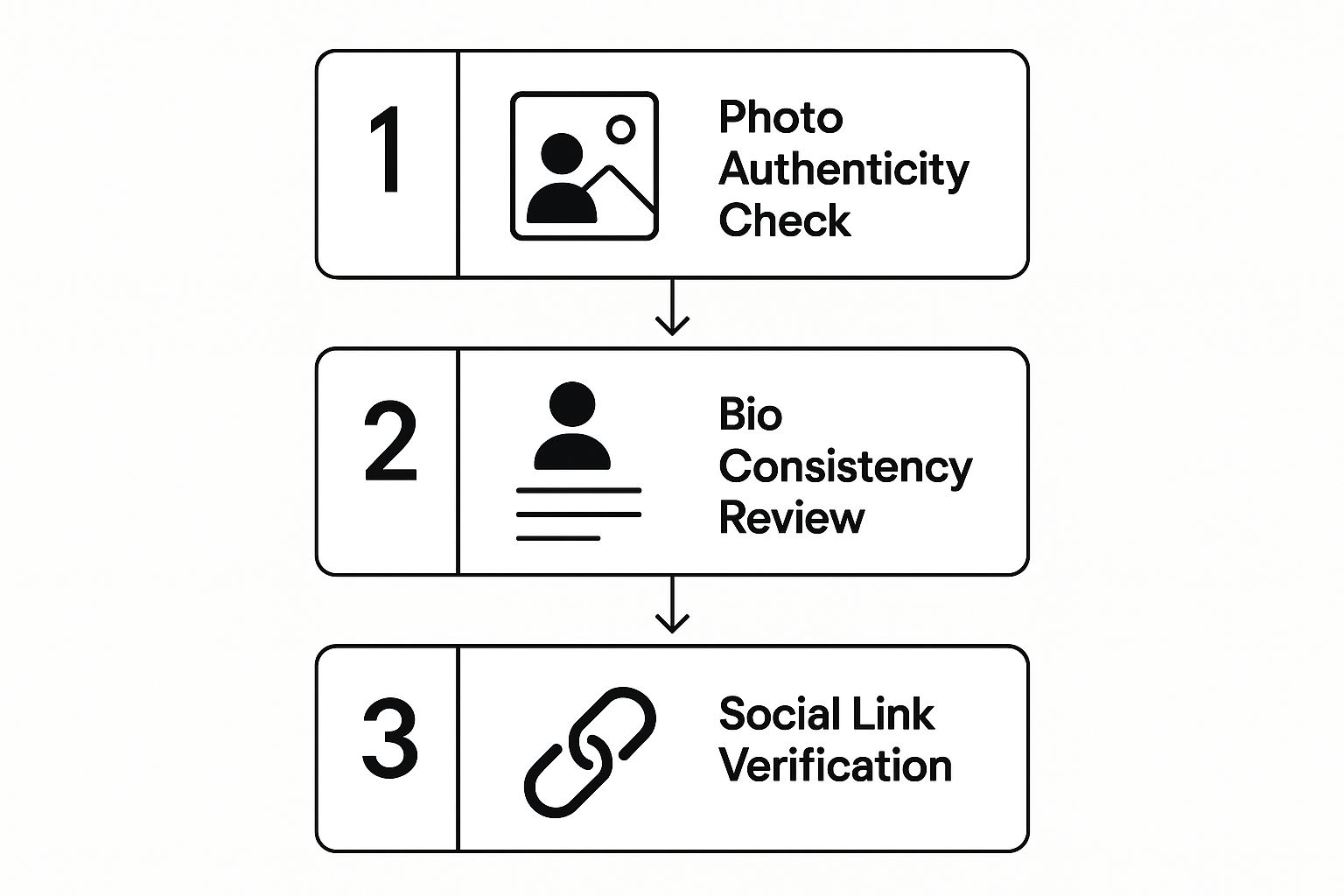
As you can see, checking the photos is a crucial first move, but it's part of a bigger picture that includes looking for consistency across their bio and any other connected accounts.
Common Visual Giveaways
Once you've done a reverse image search, it's time to put on your detective hat and look for other tell-tale signs. Scammers rarely have a full library of candid pictures, and this limitation often reveals itself in predictable ways. Keep an eye out for these classic red flags:
- All Professional Shots: Does every photo look like it came from a magazine shoot? Real people have a mix of pictures—messy holiday snaps, blurry photos with friends, and selfies taken in bad lighting. A profile full of nothing but polished headshots is a major giveaway.
- The Lone Photo: A profile with only one picture is a huge red flag. It's easy for a scammer to find and steal one great photo, but finding a whole album of the same person is much more difficult. Be very suspicious.
- Weirdly Inconsistent Quality: Pay attention to how the photos look together. If one is super sharp and high-res, but the next is grainy and pixelated, it strongly suggests the images were cobbled together from different places on the internet.
When you're looking at profile pictures, it's easy to get bogged down in the details. To make it simpler, I've put together a quick checklist to help you systematically analyse what you're seeing.
Red Flag Photo Analysis Checklist
| Red Flag | What It Looks Like | What You Should Do |
|---|---|---|
| Too Perfect | Every photo is a professional, flawless headshot. No candid or casual shots. | Run a reverse image search to see if the photos appear elsewhere online. |
| Only One Photo | The profile contains a single, often very attractive, picture. | Ask them for another photo or to video chat. A scammer will usually have an excuse. |
| Mismatched Quality | Some photos are crystal clear, while others are blurry, cropped oddly, or pixelated. | This suggests photos were scraped from various online sources. Treat the profile with caution. |
| No Social Context | The person is always alone in their photos. No pictures with friends or family. | Real people usually have photos showing their social life. A lack of this can be a warning sign. |
| Odd Details | Noticeable editing, strange backgrounds, or details that don't match their story (e.g., winter clothes but they claim to live in a hot climate). | Trust your eyes. If something feels off, question it directly or move on. |
Using a simple checklist like this helps you stay objective and spot patterns you might otherwise miss. It turns a gut feeling into actionable evidence.
At the end of the day, trust your instincts. If the photos just feel staged, too polished, or a bit off, it’s worth taking a step back. With some estimates suggesting that up to 10% of all dating profiles are fake, a bit of healthy scepticism is your best friend. When a profile seems too good to be true, it often is.
Reading Between the Lines of Their Bio
A scammer's profile biography is often a house of cards, built with vague clichés and glaring inconsistencies. The photos might look convincing at first glance, but the bio is usually where their story starts to fall apart. Think about it: genuine profiles tend to have a personal, sometimes even quirky, flavour to them.
Fake profiles, on the other hand, often feel bland and generic. They’re designed to cast the widest net possible. You'll see phrases like "loves travelling, movies, and having a laugh." While lots of people enjoy these things, a profile that offers no specifics is a red flag. A real person might mention they’re saving up to see the Northern Lights or that they’re obsessed with 80s horror films. A scammer just keeps it vanilla.
Vague Descriptions and Emotional Hooks
Be on the lookout for bios filled with dramatic life stories that sound a bit too much like a film plot. Scammers love to use emotional hooks, often claiming to be a widowed doctor working abroad or an international entrepreneur facing a sudden, dramatic crisis. These stories are crafted to make you feel instant sympathy, fast-tracking a sense of intimacy that isn't real.
If their life story reads like a soap opera script and their hobbies are as generic as a stock photo, it’s a major warning sign. Real people are much more nuanced and specific.
Poor grammar and spelling can be another dead giveaway, especially if it doesn't match their supposed background. If someone claims to be a "highly educated professor from London" but their profile is riddled with basic mistakes, you should definitely pause for thought. These are the little threads you can pull to unravel the entire fake persona.
Finally, do a quick sense-check. Does their claimed job and location line up with their described lifestyle? If they say they're a struggling artist but their bio talks about frequent luxury trips, something just doesn't add up.
For more insights on building an authentic profile and spotting genuine effort in others, check out our comprehensive dating tips for success.
Spotting the Red Flags in Their Messages
Once you start chatting, a scammer’s true intentions really start to show. The way they message is often the biggest giveaway because it’s all designed to play on your emotions and bypass your common sense. A real connection takes time to grow, but a scammer wants to rush intimacy.
One of their go-to moves is love bombing. This is where they shower you with over-the-top affection and declare their undying love at a speed that feels… well, a bit unsettling. If someone you’ve been talking to for three days is already calling you their soulmate, it’s not romantic—it’s a huge red flag.
If their messages feel like a perfectly polished script, it’s because they probably are. Scammers often rely on pre-written lines meant to pull at your heartstrings, telling you exactly what you want to hear and mirroring your dreams with uncanny precision.
This tactic is disturbingly effective, which is why you need to keep a level head. Recent figures from the Barclays Scams Bulletin revealed that romance fraud in the UK shot up by 20% year-on-year. Even more concerning, 21% of adults on dating apps have been asked for money. You can read the full breakdown on the rise of UK romance scams to see just how widespread this issue has become.
The Classic Excuses and Inevitable Demands
A massive warning sign I see all the time is a complete refusal to meet up or even jump on a quick video call. Scammers always have a ready-made excuse.
- "My camera is broken." Honestly, this is the oldest trick in the book. It’s 2024; almost everyone has a functioning camera in their pocket.
- "I'm working on an oil rig / serving overseas." By creating a situation where meeting is physically impossible, they can keep the con going for months.
- "Let's chat on WhatsApp instead." This is a big one. They want to get you off the dating app’s secure platform as fast as possible, moving the conversation somewhere their account can’t be easily flagged or reported.
And then comes the final, undeniable proof you’re talking to a scammer: the request for money. The story will be heart-wrenching and urgent—a sudden medical bill, a lost wallet while travelling, or a business investment that’s about to fall through. No matter how genuine it sounds, you must never send money to someone you only know from online.
Knowing how to write a good opening message is great, but knowing when to walk away is far more important. If you want to polish your own approach (the genuine kind!), you can take a look at our guide on how to impress with a first message on a dating app.
How to Discreetly Verify Their Identity

A bit of simple verification now can save you a world of heartache later. After you've scrutinised their photos and bio, it’s time to see if their story holds up across the web. This isn't about playing detective; it's about being savvy and using simple checks to confirm they are who they say they are.
A quick, non-intrusive search is the perfect place to start. Just use their name and any other breadcrumbs they’ve dropped—like their job title or city—and see what pops up on other social or professional sites.
Building a Consistent Picture
Searching for them on platforms like LinkedIn or even Instagram can tell you a lot. What you're looking for aren't exact one-to-one matches, but the hallmarks of a real, lived-in digital life. Is there a LinkedIn profile that backs up their claimed profession and career path? Does their Instagram have photos with friends and family that stretch back a few years?
Keep an eye out for these tell-tale signs of an authentic digital footprint:
- Consistency Across Platforms: The details on their LinkedIn should roughly match what they've told you and what’s on their dating profile.
- Signs of Genuine Activity: A real social media account will often have tagged photos, comments from friends, and a posting history that spans years, not weeks. A brand-new account with a handful of posts is a major red flag.
- Mutual Connections: On some networks, you might even find you have friends in common—a massive green flag for legitimacy.
Here's something to keep in mind: a complete absence of a digital footprint can be just as suspicious as conflicting information. In this day and age, very few people have zero online presence. It could mean they’re hiding something, or that the person you're talking to is a complete fabrication.
This kind of basic online vetting helps you piece together a more complete, trustworthy picture of the person on the other end. It’s a straightforward but incredibly effective way to spot a fake profile before you get too invested.
What to Do When You Suspect a Fake Profile
That sinking feeling when you realise the person you're talking to might not be real is deeply unsettling. But don't panic. The most important thing is to act decisively to protect yourself and stop them from preying on anyone else.
Your best friends in this situation are the block and report functions. Every decent dating app has them, and you shouldn't think twice about using them. Reporting flags the profile for the app's safety team to investigate and, hopefully, remove. Blocking cuts off all contact immediately, giving you instant peace of mind. It’s a clean break.
Taking Decisive Action
This is why it pays to choose dating apps with robust safety features right from the start. Things like photo verification, often shown as a blue tick or badge, mean the platform has at least tried to confirm the user is who they say they are. It’s not foolproof, but it’s a simple hurdle that makes life much harder for a scammer.
Trust your gut. It's your most reliable tool in online dating. If something feels off, it probably is. Don't get drawn into a game of trying to expose them—just report, block, and move on. Your emotional energy is as valuable as your personal data.
Learning to handle these situations is, unfortunately, part of the modern dating experience. For more guidance on building safer and more genuine interactions, check out our guide on relationship advice for stronger connections.
If You've Already Sent Money or Information
If things have gone further and you've shared sensitive details or, worse, sent money, you need to act fast. It's easy to feel embarrassed, but please don't. These scammers are masters of manipulation, and their tactics can fool even the savviest people.
Here’s what you need to do, right now:
Contact your bank or credit card company immediately. Tell them you've been a victim of fraud. They can take steps to stop any further payments and will advise you on the chances of recovering your money. The quicker you act, the better.
Report the crime to Action Fraud. This is essential. Action Fraud is the UK’s national centre for reporting fraud and cybercrime. Filing a report creates an official record and helps the authorities build a case against these criminals.
The scale of this problem is staggering. Between early 2020 and late 2024, UK authorities dealt with almost 40,000 reported cases of dating fraud, with victims losing a colossal £409.7 million. You can learn more about the latest UK dating scam statistics to understand just how widespread this is. Your report is a crucial step in fighting back.
At DatingBlog.co.uk, our mission is to help you navigate modern romance safely and with confidence. You'll find more expert advice, in-depth app reviews, and insights across our site. Start your journey to better connections at https://datingblog.co.uk.
Dating News
7 Fun 1st Date Ideas to Try in the UK (2025)
Tired of the usual? Discover our curated list of fun 1st date ideas to make a lasting impression. Find unique and creative options to suit any budget in the UK.

Stepping into the dating world can feel like navigating a maze of clichés. The predictable 'let's grab a drink' suggestion, while safe, often misses the opportunity to create a truly memorable connection. A first date is your initial canvas; it's a chance to paint a picture of who you are and genuinely discover the person sitting opposite you. This is why exploring more engaging and fun 1st date ideas is not just about being different, it's about creating a shared experience that sparks real conversation.
A well-chosen activity reveals personality in ways a simple chat over a pint might not. Whether you're swiping on apps or meeting someone through friends, the right setting can break the ice effortlessly and set the stage for something meaningful. This guide is organised to move beyond the ordinary, offering a curated list of seven dynamic, practical, and enjoyable ideas tailored for the modern UK dater. We'll explore options for every budget, interest, and season, providing the actionable insights you need to plan a first encounter that feels authentic and exciting. Forget awkward silences and think shared laughter, friendly competition, and genuine moments of discovery.
1. The Upgraded Classic: A Specialty Coffee Shop Date
Meeting for a coffee is a timeless first date for good reason. It’s a low-pressure, low-commitment way to test the waters and see if there’s a spark. However, you can elevate this simple meet-up from a mundane interview into a memorable experience by choosing the right venue. Instead of a generic chain, opt for an independent roastery or a café with a distinct personality. This simple choice demonstrates thoughtfulness and a bit of local savvy, setting a positive tone right from the start.

The goal is to find a place that offers more than just caffeine; it should be a conversation starter in itself. A unique setting provides an immediate topic of discussion, helping you bypass the initial awkwardness. Whether it's the quirky decor, the intricate brewing methods, or a unique theme, the environment itself can help fuel natural, flowing conversation. This makes it one of the most reliable and fun 1st date ideas for getting a genuine feel for someone’s personality.
How to Make It a Success
To ensure your coffee date is a hit, a little preparation goes a long way.
- Location is Key: Choose a spot that is convenient for both of you. A café with comfortable seating and a moderate noise level is crucial for easy conversation. Consider places like a cosy café-bookstore where you can browse shelves, or an artisan bakery known for its incredible pastries.
- Do Your Homework: Take five minutes to research the café online. Check their menu for interesting drinks or snacks you can recommend. Knowing they have a signature lavender latte or award-winning cinnamon buns shows initiative.
- Logistical Grace: Arrive a few minutes early to grab a good table, preferably one that isn’t too close to the door or the noisy counter. Be prepared to pay for both drinks; it’s a small, courteous gesture that is always appreciated, regardless of who initiated the date.
2. Art Gallery or Museum Visit
For a first date that feels sophisticated and sparks intellectual curiosity, a visit to an art gallery or museum is an excellent choice. This idea moves beyond the standard interview format of a coffee date, providing built-in talking points that can reveal a person’s creativity, sense of humour, and perspective on the world. It’s an interactive experience that encourages movement and shared discovery, which helps to ease first-date jitters and create a sense of partnership.

Exploring exhibits together allows conversation to flow naturally from your surroundings. You can discuss which pieces you love, which ones you find bizarre, and what emotions they evoke. This shared activity is one of the most fun 1st date ideas because it helps you learn about each other’s tastes and interests in a dynamic and low-pressure environment. Whether you're analysing a classic painting or experimenting with a hands-on science exhibit, you're creating a shared memory from the outset.
How to Make It a Success
A little planning can turn a simple museum trip into a truly impressive date.
- Choose the Right Exhibition: Pick a gallery or museum that aligns with a potential shared interest, or choose one with a diverse collection. A museum with a special, temporary exhibition adds a sense of timeliness. Consider a local history museum, a contemporary photography gallery, or even a science museum with interactive displays.
- Check the Logistics: Research opening times and admission fees beforehand. Many museums have free admission days or late-night openings with a more social atmosphere, which can be a perfect date-night setting. Allow at least two hours for the visit so you don't feel rushed.
- Plan a Follow-Up: Having a plan to grab a coffee, drink, or light meal at a nearby café afterwards is a great move. It provides a relaxed setting to discuss your favourite pieces and continue the conversation. This thoughtful touch can make the entire experience feel more complete and considered, as detailed in these proven first date ideas for a successful romantic experience.
3. Farmers Market or Food Festival
For a date that’s vibrant, interactive, and full of flavour, a trip to a local farmers market or a bustling food festival is an unbeatable choice. This idea moves away from a static, face-to-face setup and into a dynamic environment. Strolling through colourful stalls of fresh produce, artisan cheeses, and sizzling street food provides endless natural conversation starters, making it one of the most engaging and fun 1st date ideas for discovering shared tastes.

The sensory-rich atmosphere allows you to learn about each other in an organic way. You’ll quickly discover their feelings on everything from spicy food to sweet treats, all while enjoying a light physical activity. It’s a low-pressure setting where you can move at your own pace, sampling goods and supporting local vendors. This shared experience feels less like an interview and more like a small adventure, creating a positive and memorable foundation.
How to Make It a Success
A little planning can transform a simple market visit into a fantastic date.
- Pick the Right Venue: Not all markets are created equal. Look for one with a good mix of food stalls, produce, and perhaps even live music to enhance the atmosphere. A seasonal harvest festival, a weekly city market, or a specific food truck event all offer unique vibes.
- Logistical Prep: Arrive early to avoid the biggest crowds and get the best selection. Many vendors still prefer cash, so bring some with you just in case. Also, dressing comfortably is a must; you’ll be on your feet, so practical footwear is key.
- Embrace Sharing: The best part of a food-focused date is trying things together. Suggest sharing a few small items, like a gourmet sausage roll or a box of fresh berries. This creates natural moments of connection and collaboration, helping you bond over a shared culinary experience.
4. Mini Golf or Bowling
Engaging in a light-hearted activity is a fantastic way to break the ice and inject some playful energy into a first meeting. Mini golf or bowling are classic choices because they shift the focus from intense, face-to-face conversation to a shared, interactive experience. This creates natural lulls and highs, allowing conversation to flow more organically around the activity, which is perfect for easing first-date jitters. It’s a chance to laugh at a missed putt or a gutter ball, revealing a lot about someone's sense of humour and how they handle a little friendly competition.

Choosing an activity-based date like this signals that you’re up for a bit of fun and not just a formal interview. The shared goal, whether it’s conquering a windmill obstacle or trying for a strike, builds instant camaraderie. These types of fun 1st date ideas are less about showcasing athletic skill and more about creating shared memories and observing how you interact together in a low-stakes, entertaining environment.
How to Make It a Success
A successful activity date is all about the atmosphere and attitude.
- Pick the Right Venue: Ambiance is crucial. Look for a quirky, themed mini-golf course with creative obstacles or a retro bowling alley with a cool, vintage vibe. Some venues even offer glow-in-the-dark or cosmic bowling sessions, adding another layer of novelty to the experience.
- Keep it Playful, Not Competitive: The goal is connection, not victory. Keep the mood light and focus on having fun together. Offer encouragement, celebrate good shots (both yours and theirs), and laugh off the bad ones. Your reaction to a silly mistake says more than a perfect score ever could.
- Plan a Post-Game Chat: The activity is a great icebreaker, but you still need time to talk. Choose a venue that has an attached bar, café, or arcade. This makes it easy to grab a drink or a snack afterwards to discuss the game and get to know each other better without the pressure of the activity itself.
5. Cooking Class or Food Workshop
Diving into a cooking class or food workshop is a fantastic way to bypass traditional first date nerves. Instead of facing each other across a table, you’re working side-by-side, creating something delicious together. This shared activity fosters collaboration and reveals a lot about a person’s ability to work as a team, their patience, and how they handle a little culinary chaos. It’s an engaging, hands-on experience that ends with a rewarding meal you both helped prepare.
This date idea is perfect because it combines learning a new skill with genuine interaction. The structure of the class provides natural conversation prompts, eliminating the pressure to constantly think of what to say next. Whether you're mastering the art of pasta-making, rolling sushi, or decorating cupcakes, you’re building a shared memory right from the start. This makes it one of the most interactive and fun 1st date ideas for creating an immediate bond.
How to Make It a Success
A successful culinary date hinges on choosing the right class and having the right mindset.
- Choose Wisely: Pick a cuisine or skill you both find exciting. Italian, Thai, or even a baking workshop are usually safe bets. Check local culinary schools, community centres, or even restaurants that host special classes. Ensure the class length fits a first date, aiming for around two to three hours.
- Book in Advance: Popular classes fill up quickly, so book your spot well ahead of time. This shows great planning and ensures you won’t face a last-minute disappointment. Arrive with an appetite, as you’ll almost always get to enjoy the fruits of your labour at the end.
- Embrace the Experience: Don’t worry about being a master chef. The goal is to have fun, not to achieve culinary perfection. Be prepared to laugh at mistakes, help each other out, and enjoy the process. Wear comfortable clothes and closed-toe shoes suitable for a kitchen environment. While a gift isn't expected on a first date, you might find some inspiration for the future; you can discover some thoughtful gift ideas on datingblog.co.uk if things go well.
6. Outdoor Adventure (Hiking, Park Walk, Beach)
Swapping the confines of a café or bar for the great outdoors can be a refreshing and dynamic way to get to know someone. An outdoor date, whether it’s a scenic hike, a relaxed park walk, or a stroll along the beach, removes the pressure of constant eye contact and allows for more natural, side-by-side conversation. This setting provides a shared experience and beautiful scenery, offering plenty of organic talking points to keep the dialogue flowing.
The beauty of this date is its simplicity and flexibility. It taps into a sense of shared discovery, creating a memorable "we did this together" moment right from the start. Plus, the light physical activity can release endorphins, helping both of you feel more relaxed and positive. Choosing an outdoor activity is one of the most enjoyable and fun 1st date ideas for active people or anyone looking to break away from the conventional sit-down meet-up.
How to Make It a Success
A successful outdoor date is all about thoughtful planning and clear communication.
- Choose the Right Location: Select a route or location that matches both of your fitness levels. A sprawling urban park like London’s Richmond Park, a gentle coastal path, or a well-marked nature trail are excellent choices. Ensure it's a popular and safe public area.
- Communicate Clearly: Be upfront about the plan. Let your date know what to expect regarding the terrain and duration, so they can dress appropriately in comfortable shoes and weather-suitable clothing. This shows consideration for their comfort.
- Come Prepared: Check the weather forecast beforehand and have a backup plan (like a nearby pub or café) if it turns. Bring essentials like water, a couple of light snacks, and make sure your phone is fully charged. Planning ahead for parking or public transport saves a lot of stress.
7. Local Event or Festival
Diving into a local festival or community event is a fantastic way to break free from traditional date formats. Instead of a one-on-one interview, you share an experience, creating instant common ground and a dynamic environment filled with energy and things to talk about. This option shows you're engaged with your community and open to vibrant, spontaneous fun.
The beauty of a festival date lies in its built-in entertainment and relaxed atmosphere. Whether it’s an outdoor movie screening, a local music festival, or a cultural food fair, the event itself provides a constant source of amusement and conversation. This shared activity helps ease any initial pressure, allowing you to observe how your date interacts with the world around them while building a stronger connection. This approach makes it one of the more memorable and fun 1st date ideas for creating a shared story from the very beginning.
How to Make It a Success
A little planning can turn a good event date into a great one.
- Do Your Research: Look up local event listings online, on community notice boards, or on social media. Choose an event that aligns with both your interests, whether it's an art and craft fair, a community theatre production, or a seasonal celebration.
- Plan the Logistics: Check the event’s duration, location, and parking situation. Arriving a bit early helps you settle in without rushing. Bring some cash, as smaller vendors at festivals often don't accept cards.
- Be Flexible: The best part of a festival is the potential for spontaneity. While it’s good to have a rough plan, be open to exploring different stalls, trying unusual foods, or listening to a band you’ve never heard of. This adaptability is a key part of the fun.
7 Fun 1st Date Ideas Comparison
| Date Idea | Implementation Complexity 🔄 | Resource Requirements ⚡ | Expected Outcomes 📊 | Ideal Use Cases 💡 | Key Advantages ⭐ |
|---|---|---|---|---|---|
| Coffee Shop Date | Low – simple to arrange | Low – minimal cost | Comfortable conversation, safety | Low-pressure, first meetings | Affordable, flexible, public safety |
| Art Gallery or Museum Visit | Medium – requires planning/time | Low to medium – admission fees | Cultural bonding, meaningful conversation | Those interested in culture and art | Built-in conversation topics |
| Farmers Market or Food Festival | Medium – timing/location dependent | Low – mostly free entry | Shared sensory experiences, food discovery | Food lovers, community event enthusiasts | Multi-sensory, supports local vendors |
| Mini Golf or Bowling | Low to medium – booking recommended | Low – affordable entertainment | Fun competition, breaks conversation tension | Active, playful dates | Light physical activity, humor |
| Cooking Class or Food Workshop | High – advance booking needed | Medium to high – cost of class | Collaboration, tangible results, skill learning | Hands-on, culinary enthusiasts | Teamwork, memorable experience |
| Outdoor Adventure (Hiking, Park Walk, Beach) | Medium – depends on location/fitness | Low – free or low cost | Physical activity, meaningful conversation | Active, nature-loving individuals | Promotes well-being, natural setting |
| Local Event or Festival | Medium – depends on event timing | Low – often free or low cost | Shared cultural experience, entertainment | Social, culturally interested couples | Unique experiences, community support |
Crafting Your Perfect First Encounter
Navigating the world of dating can feel like a complex puzzle, but choosing the right first date shouldn't be the hardest part. As we've explored, the most successful and fun 1st date ideas are not necessarily the most extravagant or expensive. Instead, they are the ones that create a comfortable environment for genuine connection, shared laughter, and authentic conversation.
The central theme weaving through every suggestion, from the creative energy of an art gallery to the collaborative spirit of a cooking class, is the importance of a shared experience. A great first date moves beyond a simple question-and-answer session. It becomes a small story you create together, whether it’s navigating a bustling farmers' market or cheering each other on at the bowling alley. These activities provide natural conversation starters and help you see a different, more relaxed side of your date’s personality.
Key Takeaways for Your Next Date
To truly make your next first date a success, keep these core principles in mind:
- Authenticity Over Spectacle: Choose an activity that reflects your own interests and personality. If you're not an outdoorsy person, a strenuous hike might not be the best representation of who you are. Honesty in your choice of venue sets a precedent for an honest connection.
- Balance Conversation and Activity: The ideal date has a perfect mix of doing and talking. Activities like mini-golf or a walk in the park allow for lulls in the action, providing organic moments for conversation to flow without the pressure of constant eye contact.
- Prioritise Comfort and Safety: The best fun 1st date ideas are those where both people feel completely at ease. This means choosing a public place, considering your date’s comfort levels, and keeping the initial commitment low-pressure. A coffee date is brilliant because it can be extended to a walk or end gracefully after an hour.
Ultimately, the goal of a first date isn't to secure a second one; it's to enjoy a moment in time with another person and see if your energies align. By shifting the focus from "performance" to "presence," you remove immense pressure from yourself and your date. You create a space where you can both be yourselves, which is the only foundation upon which a real relationship can be built. So, take these ideas as a blueprint, personalise them to fit your style, and step into your next first date with confidence and an open mind. The adventure is just beginning.
Ready for more expert advice on navigating the modern dating landscape? For deeper insights, relationship tips, and even more fun 1st date ideas, visit DatingBlog.co.uk. Let us be your trusted companion on your journey to finding a meaningful connection.
Dating News
8 Essential First Date Topics to Spark a Genuine Connection
Struggling with first date topics? Explore our list of 8 engaging conversation starters to move beyond small talk and build a real connection. Read now!

The first date is a delicate balance of excitement and nerves. The pressure to make a good impression can often lead to stilted conversations or falling back on tired clichés. But what if you could bypass the awkward small talk and dive into discussions that genuinely reveal personality, build rapport, and set the stage for a real connection? This guide is designed to do just that, offering a curated selection of engaging first date topics that move beyond the surface.
Forget generic advice; these are strategic prompts to help you understand your date's values, passions, and worldview. At DatingBlog.co.uk, we specialise in providing modern singles with the tools for meaningful romance, and a great conversation is the first step. We’ve organised each topic with specific questions and practical tips to ensure the dialogue flows naturally, helping you learn about everything from their travel dreams and hobbies to their career journey and life goals. By the end of this article, you will have a comprehensive toolkit to transform any first meeting from an interview into an engaging, memorable experience. This isn't just about avoiding awkward silences; it's about building a foundation for something more.
1. Travel Experiences and Dreams
Discussing travel is one of the most reliable and revealing first date topics. It opens a window into your date's personality, values, and zest for life. Whether recounting past adventures or sharing future aspirations, this conversation allows you to discover common interests and gauge each other's sense of curiosity and openness to new experiences.

It’s a topic that naturally encourages storytelling, moving beyond simple Q&A and into a more dynamic and engaging exchange. You can learn whether they are a meticulous planner or a spontaneous adventurer, a luxury seeker or a budget backpacker. This isn't just about listing destinations; it’s about sharing the feelings and memories attached to them.
Why This Topic Works So Well
Talking about travel is universally appealing and less intrusive than other personal topics. It provides a positive and aspirational framework for conversation, keeping the mood light while still offering depth. It is an excellent way to see how your worldviews might align.
Key Insight: Focus on the why behind their travel choices. Asking what drew them to a specific place or what they learned from an experience offers much deeper insight than simply asking where they have been.
How to Approach the Conversation
Keep the discussion inclusive and avoid making anyone feel inexperienced. If your date hasn't travelled internationally, pivot to local explorations or dream destinations.
- Start Broad: Begin with an open-ended question like, "Have you done any travelling you've particularly enjoyed?" or "If you could hop on a plane tomorrow, where would you go?"
- Share Your Own Stories: Offer a brief, interesting story of your own. Mentioning a funny travel mishap can be very endearing and shows you don’t take yourself too seriously.
- Ask Follow-Up Questions: Go beyond the surface. Instead of just "Did you like it?" ask, "What was the most surprising thing you discovered there?" or "What's your favourite memory from that trip?"
This approach ensures the conversation remains balanced and becomes a shared exploration rather than an interview, making it one of the most effective first date topics for building a genuine connection.
2. Hobbies and Passions
Delving into hobbies and passions is a fantastic way to understand what truly makes your date tick. This topic uncovers what energises them, how they spend their free time, and what they value outside of work. It’s a direct look into their personality, revealing whether they are creative, analytical, adventurous, or community-oriented.

Talking about what you love doing naturally brings out enthusiasm and positive energy, making the conversation more animated and genuine. Whether it's a passion for rock climbing that reveals a love for physical challenges, a dedication to cooking that shows a nurturing side, or an interest in photography that highlights a creative eye, these details are invaluable.
Why This Topic Works So Well
Hobbies are a low-pressure, high-reward area of conversation. Unlike work or family history, they are chosen interests, offering a pure reflection of someone's personality. This is one of the most effective first date topics because it opens doors to finding shared interests and planning potential second dates.
Key Insight: The goal isn't just to list activities but to understand the feeling behind them. Ask what they get out of their hobby or what they love most about it to uncover their core motivations and values.
How to Approach the Conversation
Show genuine curiosity and be prepared to share your own passions with equal enthusiasm. The key is to create a balanced exchange, not an interrogation.
- Open with a Casual Question: Start with something relaxed like, "What do you love to do when you're not working?" or "Have you picked up any interesting hobbies lately?"
- Share Your Own Passions: Talk about one of your interests and what it means to you. For example, "I've recently gotten into watercolour painting; I find it so relaxing." This invites them to share in return.
- Ask Deeper Follow-Up Questions: Move beyond the surface. Inquire with questions such as, "That sounds fascinating, how did you first get into that?" or "What's the most rewarding part of that for you?"
This approach allows the conversation to flow organically, building a connection based on the things that bring you both joy and fulfilment.
3. Career and Professional Journey
Navigating conversations about work on a first date can be a delicate balance, but when handled correctly, it offers valuable insight into a person's passions, ambitions, and values. Discussing professional journeys isn't about reciting a CV; it's about understanding what drives someone, what challenges they enjoy, and how they see their contribution to the world.

This topic can reveal a lot about a person’s character. For instance, a teacher's story about their passion for education or an entrepreneur's tale of their startup's highs and lows provides a much deeper understanding than their job title alone. It’s an opportunity to connect over shared values like dedication, creativity, or work-life balance.
Why This Topic Works So Well
A person’s career often takes up a significant portion of their life, making it a relevant and substantial area of conversation. It moves beyond superficial chat to explore what a person is truly passionate about and proud of. When approached with curiosity, it becomes one of the more revealing first date topics for gauging long-term compatibility.
Key Insight: The goal is to understand the person, not the position. Focus on their feelings about their work, the "why" behind their career choices, and the stories they tell, rather than getting bogged down in industry jargon or salary talk.
How to Approach the Conversation
The key is to keep the tone light and inquisitive, not like a job interview. Frame your questions around experiences and feelings to ensure the discussion remains personal and engaging rather than purely professional.
- Start Broad: Use open-ended questions like, "What’s the most interesting or surprising thing that’s happened to you at work?" or "What led you down your current career path?"
- Share Your Own Journey: Talk about what you find fulfilling in your own work or mention a project you're excited about. This creates a reciprocal exchange.
- Ask Follow-Up Questions: Dig deeper with genuine curiosity. Ask, "What do you enjoy most about what you do?" or "What's the biggest lesson you've learned in your career so far?"
By focusing on passion and personal growth, you can transform a potentially dry topic into a fascinating window into your date's world, making the conversation both meaningful and memorable.
4. Food and Dining Experiences
Food is a universal language, making it one of the most enjoyable and effortless first date topics. It's a subject everyone can relate to, offering a fun way to explore cultural backgrounds, personal preferences, and lifestyle choices. From favourite childhood meals to ambitious cooking projects, this conversation can reveal a lot about a person’s sense of adventure and comfort.

This topic is more than just listing favourite cuisines; it’s about sharing stories and experiences. Discussing food can organically lead to planning a second date, whether it's trying a recommended restaurant or even cooking together. It uncovers whether your date is an adventurous eater, a home-comforts connoisseur, or a passionate home cook.
Why This Topic Works So Well
Talking about food is inherently positive and low-pressure. It taps into memories, traditions, and simple pleasures, fostering a sense of warmth and connection. It’s a brilliant way to find common ground and learn about each other's daily lives and cultural roots without being too intrusive.
Key Insight: Go beyond likes and dislikes. Asking about a food that evokes a strong memory or a family recipe they cherish can reveal personal stories and emotional connections, making the conversation far more meaningful.
How to Approach the Conversation
Keep the discussion light, positive, and inclusive. Focus on enjoyment and exploration rather than dietary restrictions or criticisms, which can dampen the mood. The goal is to share and connect over a shared human experience.
- Start with Broad Questions: Kick off with something open and inviting, like, "Have you tried any great new restaurants lately?" or "What's the best meal you've had this year?"
- Share Your Own Experiences: Talk about a dish you love to cook or a funny story about a time you tried something exotic. This makes the conversation a two-way street and shows your own personality.
- Ask About Their Background: Inquire gently about food from their childhood or family traditions. Questions like, "Was there a special dish your family always made for celebrations?" can lead to lovely, personal anecdotes.
By exploring this subject, you can not only have an engaging chat but also gather ideas for future romantic experiences, perhaps finding some inspiration from these proven first date ideas for a successful romantic experience in the UK. This makes food one of the most versatile and rewarding first date topics available.
5. Entertainment Preferences
Discussing entertainment preferences like films, TV shows, music, and books is a fantastic way to find common ground and understand your date's cultural tastes. This topic is light, fun, and offers countless avenues for conversation, revealing personality traits and shared interests without feeling too intrusive. It helps you see if your pop culture worlds align, which can be a strong indicator of compatibility.
From bonding over a mutual love for a niche sci-fi series to discovering you both frequent the same local music venues, these shared passions create an immediate connection. Learning about their entertainment choices provides a snapshot of how they unwind, what makes them laugh, and what stories resonate with them. It’s a comfortable yet insightful way to explore each other's inner worlds.
Why This Topic Works So Well
Entertainment is a universally relatable subject that keeps the atmosphere relaxed and enjoyable. It acts as a low-stakes entry point into more personal values and perspectives. Sharing what you watch, read, or listen to is an excellent way to gauge compatibility in lifestyle and leisure activities, making it one of the most reliable first date topics.
Key Insight: Go beyond just listing favourites. Ask why they love a particular film or what they get from a certain type of music. Understanding their emotional connection to entertainment reveals much more about their personality than the titles themselves.
How to Approach the Conversation
The goal is to foster a shared exchange, not to test each other's knowledge. Be open-minded and show genuine curiosity about their tastes, even if they differ from your own.
- Start with Recent Enjoyment: Ask, "Have you seen or read anything brilliant lately?" This is less pressure than asking for an all-time favourite.
- Find Common Ground: If you discover a shared love for a TV show, dig deeper. "Who's your favourite character? What did you think of the last season's finale?"
- Share and Recommend: Offer a recommendation of your own. Saying, "If you liked that, you might love this book I just finished," shows you're engaged and opens the door for future conversations.
This approach turns a simple chat about entertainment into a dynamic exploration of shared interests, building a foundation for a genuine connection. It’s an easy-going topic that can quickly highlight your compatibility.
6. Family and Background
Carefully discussing family and background can be one of the most rewarding first date topics, offering a glimpse into what has shaped a person. It reveals their values, traditions, and the important relationships that have influenced them. Approached with sensitivity, this conversation can build a foundation of genuine understanding and emotional connection.
This topic moves beyond surface-level chatter to explore the roots of someone's personality. Sharing positive childhood memories, funny family anecdotes, or meaningful traditions helps to humanise both of you. It's an opportunity to discover their cultural heritage, what they learned growing up, and how they relate to the people closest to them.
Why This Topic Works So Well
Understanding someone's family dynamics and upbringing provides context for who they are today. It's a topic that, when handled correctly, signals a deeper interest in them as a person, not just a potential partner. It can uncover shared values and life lessons, creating a powerful sense of connection and seeing if your core principles align.
Key Insight: The goal is not to interrogate, but to share. Frame the conversation around positive experiences and general values. Asking about a favourite family tradition or a funny story about a sibling is much more effective than asking direct, potentially sensitive questions.
How to Approach the Conversation
Navigating this topic requires tact and emotional intelligence. Always start light and be prepared to change the subject if your date seems uncomfortable. The key is to keep it positive and focused on broad themes rather than intimate details.
- Start Broad: Use open-ended questions like, “Are you close with your family?” or “Do you have any fun family traditions?”
- Share Your Own Stories: Lead by example. Share a brief, heartwarming, or amusing story about your own family. This makes it a reciprocal exchange and builds trust.
- Ask Follow-Up Questions: If they mention a sibling, you could ask, "What were you two like as kids?" If they talk about a tradition, ask, "Is that something you'd want to carry on?" Acknowledging if they have children and showing interest is also important; dating someone with kids has its own unique dynamics that are valuable to understand.
By keeping the tone light and respectful, you can make this one of the most connecting first date topics, showing that you’re interested in understanding them on a much deeper level.
7. Life Goals and Aspirations
Discussing life goals and aspirations is one of the most powerful first date topics for understanding long-term compatibility. This conversation moves beyond the present moment to explore future dreams, revealing a person’s core values, drive, and what truly motivates them. It offers a glimpse into their life’s direction and whether your paths might one day align.
This topic allows you to see what excites your date about the future. Are they driven by career ambitions, personal growth, creative pursuits, or a desire to make a difference in the world? Sharing these vulnerabilities can create a surprisingly deep connection early on, building a foundation based on mutual respect for each other’s ambitions.
Why This Topic Works So Well
Talking about aspirations is inherently positive and forward-looking. It lifts the conversation into an inspiring space, showing you both as individuals with purpose and passion. It’s a fantastic way to gauge ambition and priorities without being overly serious or intrusive, helping you understand what kind of life they envision for themselves.
Key Insight: The goal isn't to judge their ambitions but to understand their passion. Listen for the excitement in their voice when they talk about their dreams, whether it’s starting a business, writing a novel, or mastering a new skill.
How to Approach the Conversation
This topic requires a little finesse to avoid sounding like a job interview. Frame it with curiosity and positivity, making it clear you are interested in their passions, not just their five-year plan.
- Ease Into It: Start with a gentle prompt like, "Is there anything you're really passionate about working towards right now?" or "What's a big dream you have for the next few years?"
- Share Your Own Dreams: Be willing to open up first. Sharing one of your own aspirations, big or small, shows vulnerability and encourages them to do the same.
- Focus on Growth: Ask questions that centre on personal fulfilment. For instance, "What skill would you love to learn if you had all the time in the world?" or "Is there a creative project you dream of starting?"
- Explore More Tips: For a broader overview of how to build rapport, you can explore more detailed dating tips for success on datingblog.co.uk.
This approach ensures the discussion remains an exciting exchange of dreams, not a formal evaluation, making it a brilliant method for assessing compatibility while keeping the date’s atmosphere uplifting.
8. Childhood and Formative Experiences
Sharing stories from your childhood offers a unique way to build emotional connection and understand how your date became the person they are today. This topic delves into formative experiences and nostalgic memories, revealing core values and personality traits in a fun, often light-hearted manner. It moves the conversation beyond surface-level facts into the realm of personal history and character formation.
Discussing growing-up stories, from funny mishaps to favourite games, provides a rich source of shared humanity and humour. You can learn about their family dynamics, where they grew up, and what shaped their early interests. It's a fantastic way to find common ground and create a sense of familiarity and warmth.
Why This Topic Works So Well
Childhood is a universal experience, making it a relatable and accessible topic. It allows for vulnerability and authenticity without venturing into overly intense territory. These conversations foster nostalgia and positive feelings, making it one of the most effective first date topics for creating a deeper, more personal bond.
Key Insight: The goal isn't to psychoanalyse your date's upbringing. Instead, focus on how their favourite childhood memories or activities have shaped the person they are now, revealing passions and personality traits that persist today.
How to Approach the Conversation
Navigate this topic with care, keeping the tone positive and steering clear of potentially painful memories. The aim is connection, not a therapy session.
- Start Light: Begin with a fun, open question like, "What was your favourite thing to do as a kid?" or "Were you a well-behaved child or a bit of a troublemaker?"
- Share a Funny Story: Lead by example with a short, amusing anecdote from your own childhood. A story about an embarrassing school play or a silly belief you held can be incredibly endearing.
- Ask About Influences: Inquire about positive figures or experiences. "Was there a teacher who really inspired you?" or "What's the best piece of advice your grandparents ever gave you?"
By keeping the focus on positive, funny, and formative moments, you can explore each other's backgrounds in a way that feels safe, engaging, and genuinely revealing.
First Date Topic Comparison Matrix
| Topic | Implementation Complexity 🔄 | Resource Requirements ⚡ | Expected Outcomes 📊 | Ideal Use Cases 💡 | Key Advantages ⭐ |
|---|---|---|---|---|---|
| Travel Experiences and Dreams | Low – casual storytelling | Low – personal stories | Reveals personality, worldview, shared interests | Icebreakers, revealing personality and values | Safe, relatable, opens multiple sub-conversations |
| Hobbies and Passions | Low – enthusiastic sharing | Low-medium – some activity details | Shows personality, priorities, potential shared activities | Building rapport via common interests | Encourages authentic expression and enthusiasm |
| Career and Professional Journey | Medium – more formal, boundary sensitive | Medium – requires thoughtful questions | Insight into ambition, goals, work-life balance | Assessing compatibility on life direction | Reveals responsibility, achievements, stability |
| Food and Dining Experiences | Low – light, engaging | Low – universally relatable | Reveals cultural background, lifestyle preferences | Easygoing, fun conversation starter | Creates immediate date ideas and cultural insight |
| Entertainment Preferences | Low – casual and relaxed | Low – common interests | Shows tastes, personality, cultural interests | Light first dates, discovering shared hobbies | Easy flow, broad topic with many follow-ups |
| Family and Background | Medium-High – sensitive and personal | Medium – requires emotional awareness | Reveals core values, relationship patterns | Deeper connection, bigger emotional insights | Builds emotional understanding and trust |
| Life Goals and Aspirations | Medium – potentially serious | Low-medium – requires thoughtful dialogue | Reveals long-term compatibility, motivation | Assessing future alignment and values | Inspiring, forward-looking conversation |
| Childhood and Formative Experiences | Medium – personal and nostalgic | Medium – needs sensitivity | Shows personality development, emotional connection | Building vulnerability and authenticity | Fosters bonding and deeper personality insight |
Turning Conversation into Connection
Navigating a first date can feel like walking a tightrope, but armed with the right approach, it becomes an exciting journey of discovery. The first date topics we've explored, from travel dreams to career journeys, are more than just items on a checklist. They are carefully selected keys, each designed to unlock a different door into your date's personality, values, and what truly makes them tick. The goal isn't to mechanically work your way through a list, but to use these prompts as a springboard for genuine, flowing dialogue.
Remember, the quality of a conversation isn't measured in the number of topics covered, but in the depth of the connection forged. The most memorable first dates are rarely about finding someone with identical hobbies or a matching five-year plan. Instead, they are about discovering a shared sense of humour, a mutual curiosity, or an unexpected spark that ignites when you share a vulnerable story or a passionate ambition. The real magic happens in the follow-up questions, the active listening, and the moments you realise you're not just talking, but truly hearing each other.
The Art of the Follow-Up
The true power of any conversation starter lies in what comes next. Simply asking "What are your hobbies?" might get you a one-word answer. But following up with "What was it about that hobby that first drew you in?" or "Is that something you do to relax or to challenge yourself?" transforms a simple question into a meaningful exploration.
Think of it as a dance: you lead with a topic, your date responds, and you react with genuine interest and a thoughtful follow-up. This back-and-forth rhythm is what builds rapport and turns a simple Q&A session into an engaging shared experience.
Beyond the Script: Authenticity is Your Superpower
Ultimately, the most crucial takeaway is to be yourself. This guide is designed to give you confidence and structure, not to provide a script. If a topic feels forced or inauthentic to you, skip it. Your genuine enthusiasm for a subject will always be more engaging than a perfectly phrased but dispassionate question.
The best first date topics are those that allow both of you to shine. By focusing on open-ended questions and demonstrating sincere curiosity, you create an environment where your date feels comfortable and valued. This approach doesn't just lead to better first dates; it lays the groundwork for a potential relationship built on respect, understanding, and authentic connection. It's about moving beyond the surface level to see if your stories, not just your interests, are compatible.
Ready to master every stage of the dating journey? From crafting the perfect profile to navigating the nuances of a new relationship, DatingBlog.co.uk offers expert-backed advice and practical guides. Explore more articles and resources at DatingBlog.co.uk to date with more confidence and success.
 Dating News1 year ago
Relationship Advice for Women and Men: Building Stronger Connections
- Dating News8 months ago
How to Spot Fake Dating Profiles A Modern Guide
- Senior Dating1 year ago
Dating Sites for Over 60s: a Comprehensive Guide to Finding Love in Old Age
- Dating tips1 year ago
Why Some Readers Are Not Interested in Dating Manhwa: Exploring Different Preference
- Dating News9 months ago
8 Dating Profile Examples: Strategic Breakdown (2025)
- Dating News9 months ago
12 Best Free Dating Sites UK: Your 2025 Guide to Love
- Dating News and Updates2 years ago
Free Canadian Dating Sites for Over 50
- Senior Dating2 years ago
Dating in Your 60s: Pros, Cons, and the Best Places to Meet